Choosing Living Room Paint Colours A Guide to Style
Your living room is the heart of your home, a space for relaxation, connection, and self-expression. And one of the most impactful ways to shape that space is through colour! Selecting the right living room paint colours can dramatically alter the mood, highlight architectural details, and even influence how the room feels in terms of size and warmth. We’ll explore everything from colour psychology and current trends to practical tips for testing and preparation, ensuring you create a living room you absolutely love.
This guide dives deep into the world of living room paint, considering factors like natural light, existing furniture, and personal style. We’ll break down popular colour families, offer specific recommendations, and discuss how to use finishes and accent walls to achieve a truly unique and inviting atmosphere. Get ready to transform your living room into a reflection of your personality!
Living Room Paint Colours: A Guide to Creating Your Perfect Space
Choosing the right paint colour for your living room can feel overwhelming. It’s more than just picking a shade you like; it’s about crafting an atmosphere, influencing how the room functions, and reflecting your personal style. This guide will walk you through everything you need to know, from understanding colour psychology to considering room size and current trends, so you can confidently transform your living room into a space you love.
We’ll explore practical tips and considerations to ensure your colour choices are both beautiful and functional.
Introduction: Setting the Stage for Living Room Colour Choices
The living room is often the heart of the home – a place for relaxation, entertaining, and connecting with loved ones. Colour plays a crucial role in shaping the mood and functionality of this space. A calming blue can create a serene retreat, while a vibrant yellow can energize the room and encourage conversation. Current design trends lean towards a blend of natural and sophisticated palettes, with earthy tones, muted greens, and warm neutrals gaining popularity.
However, the impact of natural light is paramount. A colour that looks stunning in a showroom might appear drastically different in your living room depending on the amount and direction of sunlight.
| Light Condition | Colour Perception | Adjustment Suggestions |
|---|---|---|
| North-Facing Room (Cool, Indirect Light) | Colours can appear cooler and more muted. Warm colours may seem dull, while cool colours can feel even colder. | Introduce warmer tones like yellows, oranges, or terracotta to counteract the coolness. Consider a glossier finish to reflect more light. |
| South-Facing Room (Warm, Bright Light) | Colours appear vibrant and true to their original shade. | You have more flexibility! However, be mindful of potential glare. Consider slightly muted tones to avoid overwhelming brightness. |
| East-Facing Room (Warm Morning Light, Cooler Afternoon) | Colours will appear warmer in the morning and cooler in the afternoon. | Neutral colours with warm undertones are a safe bet. Test paint samples at different times of the day to see how the colour shifts. |
| West-Facing Room (Cool Morning Light, Warm Afternoon) | Colours will appear cooler in the morning and warmer in the afternoon. | Cooler colours can balance the warm afternoon light. Consider a matte finish to minimize glare. |
Understanding Colour Psychology in Living Rooms
Colours aren’t just aesthetically pleasing; they evoke emotions and influence our behaviour. Blue, for instance, is often associated with calmness, serenity, and trust, making it a popular choice for creating a relaxing living room. Red, on the other hand, is a stimulating colour that can increase energy levels and encourage conversation. Colour palettes that promote relaxation often feature soft blues, greens, and greys, while those designed to stimulate conversation might incorporate warmer tones like oranges and yellows, or bolder colours like teal or burgundy.
Ultimately, your personal preferences and lifestyle should guide your colour selection. A busy family might benefit from a calming, neutral palette, while a couple who loves to entertain might opt for a more vibrant and energetic scheme.
Imagine a colour wheel. At its centre lies white, radiating outwards are various hues. Complementary colours sit opposite each other on the wheel (e.g., blue and orange, red and green) and create a dynamic, high-contrast look. Analogous colours, on the other hand, are adjacent to each other (e.g., blue, blue-green, green) and create a harmonious, calming effect. A visual representation would show a circular diagram divided into segments, each representing a colour.
Lines would connect complementary colours across the wheel, and shaded areas would indicate analogous colour groupings. The wheel would also include a section demonstrating how to adjust hues by adding white (tint), black (shade), or grey (tone) to create variations.
Popular Colour Families for Living Rooms
Neutral colours – whites, greys, and beiges – are the workhorses of interior design. Their versatility allows them to blend seamlessly with various furniture styles and décor elements. They provide a calming backdrop and can be easily updated with accent colours and accessories. Warm colours, such as reds, oranges, and yellows, inject energy and warmth into a space. However, they can be overwhelming if used excessively.
Balancing warm colours with cooler tones or neutral accents is key to creating a harmonious look. Cool colours – blues, greens, and purples – evoke a sense of tranquility and sophistication. They can create a relaxing and inviting atmosphere, but it’s important to choose the right shade to avoid a cold or sterile feel.
| Colour Family | Associated Feelings | Best Room Sizes | Complementary Accents |
|---|---|---|---|
| Neutrals (White, Grey, Beige) | Calm, Serene, Versatile, Sophisticated | All sizes; particularly good for small rooms | Bold colours, metallic accents (gold, silver), natural textures (wood, stone) |
| Warm Colours (Red, Orange, Yellow) | Energetic, Cheerful, Inviting, Cozy | Larger rooms; use sparingly in smaller rooms | Cool colours (blue, green), natural materials (wood, leather), neutral accents |
| Cool Colours (Blue, Green, Purple) | Calm, Relaxing, Sophisticated, Refreshing | All sizes; consider the shade’s intensity | Warm colours (orange, yellow), metallic accents (copper, brass), natural textures (linen, wool) |
| Earthy Tones (Terracotta, Olive Green, Brown) | Grounding, Natural, Rustic, Warm | All sizes, especially well-suited for creating a cozy and inviting atmosphere. | Cream, beige, gold, and natural wood accents. |
Specific Colour Recommendations & Combinations
Let’s delve into some specific paint colours and how they can be used. Sherwin-Williams Sea Salt is a popular choice for its calming, spa-like feel. It’s a grey-green with subtle blue undertones, making it incredibly versatile. Benjamin Moore Revere Pewter is a warm grey that works well in almost any light. It’s a classic choice that provides a neutral backdrop for showcasing furniture and décor.
Navy blue and gold create a luxurious and sophisticated combination. Grey and blush pink offer a soft and romantic feel. Monochromatic colour schemes, using different shades of the same colour, can add depth and interest. For example, layering various shades of grey – from light to charcoal – can create a visually appealing and cohesive look. Colour blocking, using large blocks of contrasting colours, can add a modern and playful touch to a living room.
A bold teal wall paired with a neutral grey sofa and a pop of yellow in the accessories can create a dynamic and stylish space.
Considering Room Size and Architectural Features
Lighter colours, such as whites and pale greys, can make a small living room appear larger and more open by reflecting light and creating an airy feel. Conversely, darker colours, like charcoal grey or deep navy, can create a cozy and intimate atmosphere in a large living room, making it feel more inviting and grounded. Colour can also be used to highlight architectural features.
Painting a fireplace surround a contrasting colour can draw attention to it as a focal point. Similarly, highlighting built-in bookshelves with a rich colour can showcase their architectural detail. Do’s and Don’ts for Colour Selection Based on Room Size and Shape:
- Small Room: Do use light colours. Don’t use dark colours on all walls.
- Large Room: Do use darker colours to create coziness. Don’t use all light colours, as it can feel sterile.
- Narrow Room: Do paint the shorter walls a darker colour to make the room appear wider. Don’t paint both long walls a dark colour, as it will emphasize the narrowness.
- Low Ceiling: Do paint the ceiling a lighter colour than the walls. Don’t paint the ceiling a darker colour, as it will make the room feel smaller.
Working with Existing Furniture and Décor
Choosing paint colours that complement your existing furniture is crucial for creating a cohesive look. Modern furniture styles often pair well with cool, neutral colours, while traditional furniture can be enhanced by warmer tones. Bohemian décor thrives on a mix of colours and textures, so you have more freedom to experiment. Coordinating paint colours with existing rugs, curtains, and artwork is equally important.
Pull colours from your rug or artwork to create a harmonious palette. If your living room has disparate elements, use colour to tie them together. For example, if you have a dark brown leather sofa and a Persian rug with pops of red and gold, a warm neutral paint colour with accents of red and gold can create a unified look.
A living room with a dark brown leather sofa and a Persian rug. What colour palette would best complement these elements? A warm, earthy palette featuring creams, browns, and touches of terracotta would create a harmonious and inviting space. Consider a soft beige or greige on the walls, accented with terracotta cushions and throws. Gold accents in the artwork and accessories would echo the gold tones in the rug, tying the entire room together.
Finishes and Sheens: Beyond the Colour
The finish or sheen of your paint is just as important as the colour itself. Matte finishes offer a flat, non-reflective surface that hides imperfections well and creates a soft, velvety look. Eggshell finishes have a slight sheen and are more durable than matte finishes. Satin finishes offer a subtle sheen and are easy to clean, making them a good choice for high-traffic areas.
Semi-gloss finishes have a noticeable sheen and are very durable, ideal for trim and doors. Gloss finishes are highly reflective and provide the most durability, but they can also highlight imperfections. The perceived colour of the paint can also be affected by the sheen. Higher sheens tend to make colours appear brighter and more intense.
| Finish Type | Characteristics | Recommended Use |
|---|---|---|
| Matte | Non-reflective, hides imperfections, soft look | Walls in low-traffic areas |
| Eggshell | Slight sheen, more durable than matte | Walls in moderate-traffic areas |
| Satin | Subtle sheen, easy to clean | Walls in high-traffic areas, trim |
| Semi-Gloss | Noticeable sheen, very durable | Trim, doors, window frames |
Accent Walls and Colour Pops
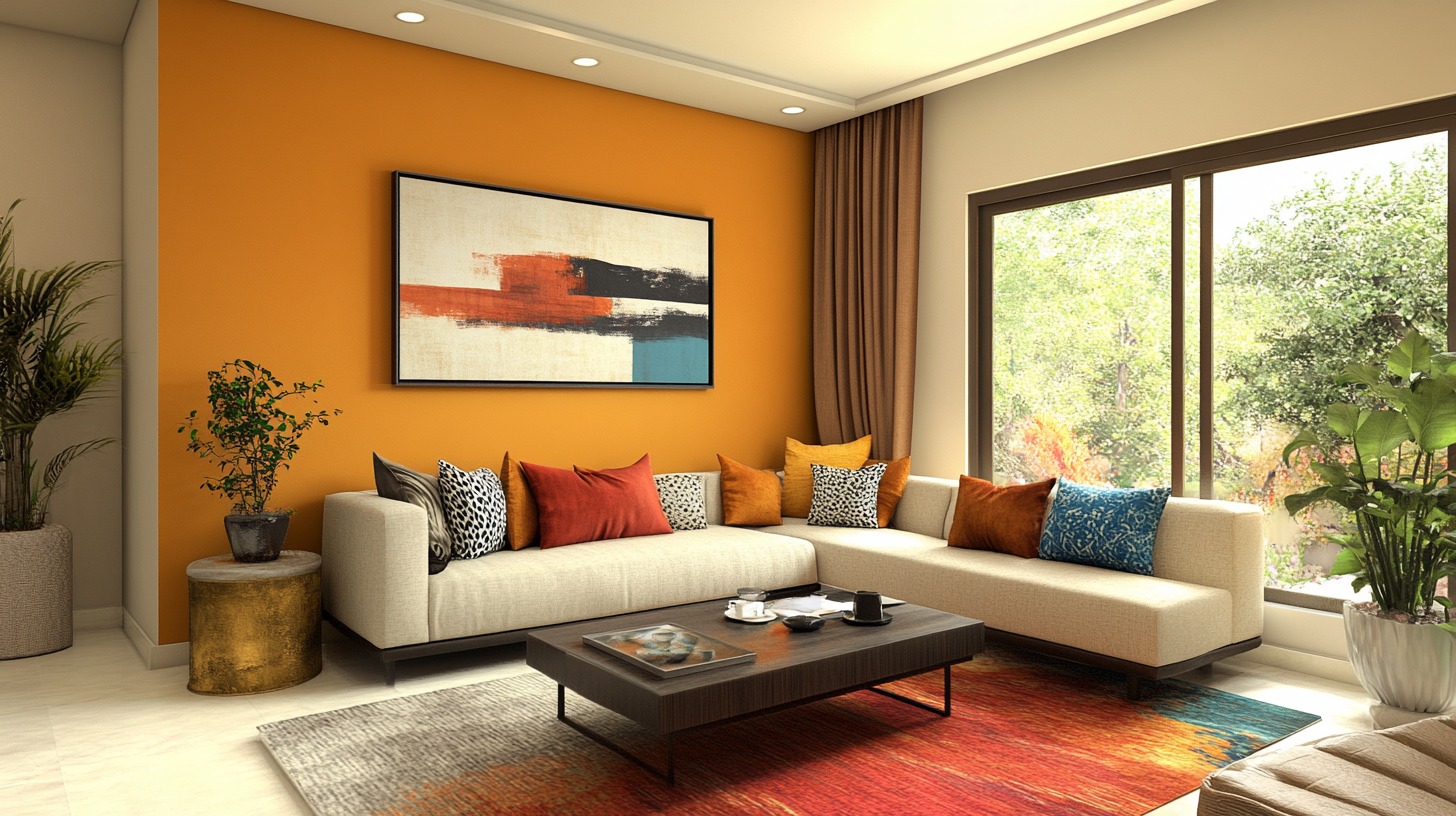
An accent wall is a single wall painted a different colour than the others, creating a focal point and adding visual interest to a room. Accent walls can be created using paint, wallpaper, or texture. Colour pops are small, strategic bursts of colour that add personality and energy to a space. These can be achieved through accessories, artwork, or even a brightly coloured piece of furniture.
For example, a living room with neutral walls could benefit from a vibrant yellow armchair or a collection of colourful cushions. Accent Wall Concepts:
- Concept 1: Coastal Calm
-A navy blue accent wall behind the sofa, paired with white walls and natural wood furniture. Complementary décor includes seashells, driftwood, and linen textiles. - Concept 2: Modern Geometric
-A grey accent wall with a geometric pattern painted in white and black. This would look striking against a backdrop of neutral walls and modern furniture. - Concept 3: Warm & Inviting
-A terracotta accent wall behind a fireplace, paired with cream walls and rustic furniture. Complementary décor includes woven baskets, leather accents, and warm-toned artwork.
Colour Trends: Current and Emerging Styles
Current living room colour palettes lean towards earthy tones like terracotta, olive green, and warm greys, reflecting a desire for connection with nature. Jewel tones, such as emerald green, sapphire blue, and ruby red, are also gaining popularity, adding a touch of luxury and drama. Pastels, particularly soft pinks and blues, offer a calming and serene feel. Emerging colour trends include a move towards more saturated hues and unexpected colour combinations.
We might see more use of deep purples, burnt oranges, and even muted teals. The key is to incorporate these trends in a subtle and intentional way, rather than going for a completely trendy look. Trending Colour Palettes:
- Earthy Neutrals: Beige, cream, terracotta, olive green – creates a warm and inviting atmosphere.
- Jewel Tones: Emerald green, sapphire blue, ruby red – adds a touch of luxury and drama.
- Soft Pastels: Blush pink, baby blue, mint green – creates a calming and serene feel.
- Warm Terracotta & Cream: A combination of earthy terracotta and soft cream creates a cozy and inviting space.
- Sage Green & Grey: A calming and sophisticated palette that blends seamlessly with natural elements.
Practical Considerations: Testing and Preparation
Before committing to a full room of paint, it’s essential to test the colour in your living room. Paint swatches can be misleading due to varying lighting conditions. Sample pots allow you to paint a small area of the wall and observe how the colour looks at different times of the day and under different lighting. Proper preparation is key to a professional-looking paint job.
This includes cleaning the walls, patching any holes or cracks, and applying a primer to ensure proper adhesion and colour uniformity. Essential Painting Supplies Checklist:
- Paint (in your chosen colour and finish)
- Paint primer
- Paint brushes (various sizes)
- Paint rollers and trays
- Painter’s tape
- Drop cloths
- Spackle and putty knife
- Sandpaper
- Cleaning supplies (soap, water, sponge)
- Safety glasses
- Gloves
Closing Summary
Source: nobroker.in
From understanding the subtle power of colour psychology to mastering the art of accent walls, we’ve covered a lot of ground in our exploration of living room paint colours. Remember, there’s no one-size-fits-all answer – the best colours are those that resonate with you and create a space you genuinely enjoy spending time in. With a little planning and experimentation, you can unlock the potential of colour to create a living room that’s both beautiful and functional.
So, grab your paint swatches, unleash your creativity, and get ready to breathe new life into your living room! Don’t be afraid to try something new and let your personality shine through – after all, it’s your space to enjoy.
General Inquiries
What’s the best colour for a north-facing living room?
North-facing rooms tend to receive less natural light, so warmer tones like soft yellows, creams, or even muted oranges can help counteract the coolness. Avoid cool blues and greys, which can make the room feel even colder.
How do I choose a paint colour that complements my existing furniture?
Start by identifying the dominant colours in your furniture and rugs. Then, choose a paint colour that either complements those colours (using analogous schemes) or provides a striking contrast (using complementary schemes). Consider the style of your furniture – modern pieces often pair well with cooler tones, while traditional pieces can handle warmer, richer colours.
What’s the difference between matte and eggshell paint finishes?
Matte finishes have a very low sheen and are great for hiding imperfections on walls. Eggshell finishes have a slight sheen, making them more durable and easier to clean, while still offering a softer look than satin or gloss.
Should I paint an entire room one colour, or use an accent wall?
It depends on your style and the room’s features! A single colour creates a cohesive and calming feel. An accent wall can add visual interest and highlight a specific area, like a fireplace or a gallery wall. Experiment with both to see what you prefer.
How many paint samples should I test before committing?
At least three! Different lighting conditions can drastically change how a colour appears. Test your top choices in different areas of the room and at different times of day to get a true sense of how they’ll look.
What’s the best way to prepare a room for painting?
Thorough preparation is key! Clean the walls with a mild detergent, patch any holes or cracks, and apply a primer if necessary (especially over dark colours or new drywall). Protect your floors and furniture with drop cloths and painter’s tape.
