Exploring the Rich World of Dark Reddish Brown
Dark reddish brown – it’s a color that evokes images of ancient forests, weathered stone, and rich, earthy tones. It’s more than just a shade; it’s a complex hue with a fascinating history, diverse natural occurrences, and surprising applications across art, design, and even science. This exploration delves into the many facets of this captivating color, from its geological origins to its symbolic meanings throughout cultures and its role in the natural world.
We’ll journey through the landscapes where this color thrives, examining the geological formations and biological processes that create it. From the rust-colored rocks of canyons to the deep hues of animal fur and tree bark, we’ll uncover the science and artistry behind this often-overlooked shade. Finally, we’ll consider its impact on design and culture, revealing how dark reddish brown continues to inspire and influence our world.
The Allure of Dark Reddish Brown: A Comprehensive Exploration
Dark reddish brown. It’s a color that evokes earth, rust, aged wood, and a sense of quiet richness. It’s a hue found everywhere, from the depths of geological formations to the vibrant plumage of birds. This article delves into the multifaceted nature of this color, exploring its natural origins, biological manifestations, material properties, historical significance, and artistic applications. We’ll unpack the science behind it, compare it to similar shades, and consider its role in design and culture.This color isn’t just a single shade; it’s a spectrum.
Understanding its nuances and the factors that contribute to its appearance is key to appreciating its complexity and versatility. Let’s begin.
Natural Occurrences of the Hue
The earth itself is a primary source of dark reddish brown pigments. This color frequently arises from the interaction of minerals and geological processes over vast stretches of time. We see it in a variety of formations, each with its own unique story to tell.Geological formations often display this color due to the presence of iron oxides. Hematite (Fe₂O₃), for example, is a common culprit, producing a deep reddish-brown hue.
It’s frequently found in banded iron formations, ancient sedimentary rocks that represent periods of significant oxygenation in Earth’s early atmosphere. Other formations include laterite soils, which are rich in iron and aluminum oxides, and certain types of shale and sandstone where iron minerals have been deposited. The specific shade can vary depending on the concentration and type of iron oxide, as well as the presence of other minerals like manganese.Soil types exhibiting this coloration are often indicative of oxidation processes.
When iron-rich minerals in the soil are exposed to oxygen and water, they undergo oxidation, forming iron oxides that impart the reddish-brown color. The presence of organic matter also contributes; as organic material decomposes, it can release humic acids that react with iron, further intensifying the color. Lateritic soils, common in tropical and subtropical regions, are a prime example, as are some argillic soils where iron accumulates in the subsoil.Historically, naturally occurring pigments have been extracted from these sources for use in art and dyes.
Ochre, a naturally occurring earth pigment, is a classic example. It’s composed primarily of hydrated iron oxides and clay. Extraction methods were relatively simple, involving the collection of the ochre-rich earth, crushing it into a powder, and then mixing it with a binder like water, oil, or egg yolk to create a paint. Similarly, some dyes were derived from roots and barks containing tannins that reacted with iron salts to produce reddish-brown hues.
| Location | Geological Formation/Soil Type | Contributing Factors |
|---|---|---|
| Pilbara Region, Western Australia | Banded Iron Formation | Hematite (Fe₂O₃) deposition, ancient oxygenation events |
| Amazon Basin | Lateritic Soil | Intense weathering, high iron and aluminum oxide content, tropical climate |
| Provence, France | Ochre Deposits | Hydrated iron oxides, clay minerals |
| American Southwest (e.g., Arizona, Utah) | Shale and Sandstone | Iron mineral precipitation, sedimentary processes |
| Java, Indonesia | Argillic Soil | Iron accumulation in subsoil, weathering of parent rock |
Biological Manifestations
The dark reddish-brown hue isn’t limited to the geological world; it’s also prevalent in the animal and plant kingdoms. The appearance of this color in living organisms is often a result of complex biological processes, particularly pigment production.In animals, this color frequently manifests in fur or feathers. Melanin, the primary pigment responsible for coloration in many animals, exists in several forms.
Eumelanin produces black and dark brown colors, while phaeomelanin produces reddish-brown and yellow-brown colors. The ratio of eumelanin to phaeomelanin determines the final color. For example, the reddish-brown fur of a fox or the mottled plumage of a grouse are due to varying concentrations of phaeomelanin. Genetic factors play a crucial role in determining the type and amount of melanin produced.Plant life also exhibits this color in various forms.
Tree bark, particularly in older trees, often develops a dark reddish-brown hue due to the accumulation of tannins and other phenolic compounds. Leaves, especially in autumn, can display this color as chlorophyll breaks down, revealing underlying carotenoids and anthocyanins, some of which can produce reddish-brown tones. Certain fruits, like some varieties of apples and pears, also exhibit this coloration as they ripen.
The ecological significance of this coloration varies; in some cases, it provides camouflage, while in others, it may attract pollinators or deter herbivores.Fungal species are another source of this color. Many species of mushrooms and other fungi produce reddish-brown pigments, often as a protective mechanism against UV radiation or as a byproduct of their metabolic processes. These pigments play a vital role in decomposition and nutrient cycling, breaking down organic matter and releasing essential nutrients back into the environment.Imagine a forest floor scene dominated by dark reddish-brown tones.
Decaying leaves, a mosaic of russet and umber, blanket the ground. Patches of moss, a deeper shade of brown, cling to fallen logs. Clusters of reddish-brown mushrooms,Armillaria mellea* (honey fungus) for example, emerge from the leaf litter. The bark of ancient oak trees, a rich mahogany hue, provides a backdrop to the scene. Twisted roots, partially exposed by erosion, display a network of reddish-brown veins.
The overall impression is one of quiet decay and rich, earthy life.
Materials and Substances
Beyond the natural world, dark reddish-brown appears in a variety of materials and substances, often as a result of oxidation or other chemical processes.Metals, when oxidized or corroded, frequently develop a dark reddish-brown patina. Iron, in particular, readily rusts, forming iron oxides that create a characteristic reddish-brown layer. The texture and pattern of the corrosion can vary depending on the environmental conditions and the alloy composition.
Copper, when exposed to air and moisture, can also develop a reddish-brown patina, although this is typically a more greenish hue.Wood types exhibiting this color are often those that have aged or been exposed to sunlight. Species like mahogany, walnut, and cherry naturally contain reddish-brown pigments, but their color deepens and intensifies with age and exposure. The tannins in wood react with oxygen, creating melanins that contribute to the darkening process.In ceramics and pottery, achieving this hue requires careful control of the firing process and glaze compositions.
Iron oxides are commonly used as colorants in glazes, producing a range of reddish-brown shades depending on the concentration and the other ingredients in the glaze. The firing temperature and atmosphere (oxidizing or reducing) also influence the final color.
| Material | Specific Example | Color Variation | Associated Texture |
|---|---|---|---|
| Iron | Rusted Iron Gate | Deep reddish-brown with orange undertones | Rough, flaky, porous |
| Copper | Weathered Copper Roofing | Dark reddish-brown with greenish hints | Smooth, slightly iridescent |
| Wood | Aged Mahogany Furniture | Rich, dark reddish-brown with subtle grain patterns | Smooth, polished |
| Ceramics | Iron-Glazed Pottery Bowl | Earthy reddish-brown with mottled variations | Slightly rough, matte |
Historical and Cultural Significance
The dark reddish-brown color holds a rich tapestry of symbolic meanings across different cultures and throughout history.In many cultures, this color is associated with the earth, stability, and grounding. It can represent warmth, comfort, and a connection to nature. However, it can also symbolize decay, mourning, or even danger, depending on the context. In ancient Egypt, reddish-brown ochre was used in burial rituals and to depict the desert landscape.
In medieval Europe, it was often associated with humility and penitence, and was frequently used in religious art.Historically, this color has been used in traditional medicine and healing practices. Certain plants and substances exhibiting this color, such as walnut hulls and pomegranate rind, were believed to possess medicinal properties. Walnut hulls, for example, were used as an astringent and antiseptic, while pomegranate rind was used to treat diarrhea and intestinal parasites.Historical pigments and dyes that produced this color were highly valued.
Ochre, as mentioned earlier, was a staple pigment for millennia. Logwood, derived from the heartwood of certain trees, was used to create a range of reddish-brown and purple dyes. The preparation methods involved grinding the raw material into a powder and then extracting the color using water or other solvents.Here’s a timeline showcasing the historical use of this color in various artistic movements:* Prehistoric Era: Ochre pigments used in cave paintings (e.g., Lascaux, France).
Ancient Egypt
Reddish-brown ochre used in burial masks and tomb paintings.
Medieval Period
Earth pigments used extensively in illuminated manuscripts and frescoes.
Renaissance
Logwood and other natural dyes used in portraiture and textile art.
19th Century
The rise of synthetic pigments, including iron oxides, providing a wider range of reddish-brown hues.
20th Century
Continued use of both natural and synthetic pigments in various artistic mediums.
Shades and Variations
The term “dark reddish-brown” encompasses a wide spectrum of colors, each with its own unique characteristics. Understanding these nuances is crucial for achieving the desired effect in art and design.Common variations include umber (a naturally occurring earth pigment with a slightly greenish undertone), sepia (derived from the ink sac of cuttlefish, producing a warm, brownish-gray hue), mahogany (a rich, reddish-brown color reminiscent of the wood of the mahogany tree), and chestnut (a lighter, more golden-brown shade).The subtle differences between these variations lie in their saturation, brightness, and undertones.
Umber tends to be more muted and greenish, while sepia is more desaturated and grayish. Mahogany is a deeper, more saturated reddish-brown, while chestnut is lighter and more golden.Lighting conditions significantly affect the perceived color. Warm light sources (e.g., incandescent bulbs) tend to enhance the reddish tones, while cool light sources (e.g., fluorescent lights) can make the color appear more muted and grayish.Imagine a gradient transitioning from dark reddish-brown to lighter shades.
On the left, a deep, saturated umber, almost black in its intensity. Moving right, a richer mahogany, glowing with warmth. Then, a lighter chestnut, with hints of gold. Next, a softer sepia, tinged with gray. Finally, a pale, sandy brown, almost beige.
Each shade is clearly distinct, yet all share a common ancestry in the realm of dark reddish-brown.
Artistic and Design Applications
The dark reddish-brown color offers a wealth of possibilities for artistic and design applications, capable of creating a range of moods and atmospheres.In interior design, this color can be used to create a sense of warmth, comfort, and sophistication. It pairs well with neutral colors like cream, beige, and gray, as well as with bolder accent colors like teal, emerald green, and mustard yellow.
It’s particularly well-suited for creating cozy and inviting spaces, such as living rooms, bedrooms, and libraries.In graphic design, this color can be used to convey a sense of trustworthiness, stability, and authenticity. It can be incorporated into logos, websites, and marketing materials to create a professional and grounded image. However, it’s important to use it judiciously, as it can be visually heavy if overused.In fashion design, this color is versatile and can be adapted to different seasons and occasions.
It works well in clothing, accessories, and footwear, and can be paired with a variety of other colors. It’s particularly popular in autumn and winter collections, where it evokes a sense of warmth and coziness.Consider a website design using dark reddish-brown as a primary accent. The background is a soft, off-white. The navigation bar is a deep mahogany, providing a subtle contrast.
The headings are in a dark brown font, while the body text is in a lighter gray. Images are desaturated and have a slightly warm tone.
The design rationale behind this website is to create a sense of understated elegance and trustworthiness. The dark reddish-brown color evokes a feeling of warmth and stability, while the clean typography and minimalist layout convey a sense of professionalism and clarity. The overall effect is one of sophistication and approachability.
Scientific Properties
The perception of dark reddish-brown by the human eye is governed by the physics of light and color. This color is produced when a material reflects a specific range of wavelengths and absorbs others.Typically, materials exhibiting this color reflect wavelengths in the red and brown regions of the visible spectrum (approximately 580-680 nm for red and 450-550 nm for brown) while absorbing other wavelengths.
The precise wavelengths reflected depend on the material’s composition and structure.The chemical compounds responsible for producing this color vary depending on the material. In iron oxides, the color arises from the electronic transitions within the iron ions. In organic pigments, the color is due to the absorption of light by conjugated double bonds.
| Material | Chemical Compound(s) | Spectral Reflectance Characteristics |
|---|---|---|
| Hematite (Fe₂O₃) | Iron(III) oxide | High reflectance in the red region (600-700 nm), lower reflectance in other regions |
| Logwood Extract | Naphthoquinones | Broad reflectance across the red and brown spectrum, with peaks around 550-650 nm |
| Walnut Wood | Tannins, Melanins | Complex reflectance pattern with peaks in the red and brown regions, influenced by wood density and age |
Comparisons and Contrasts
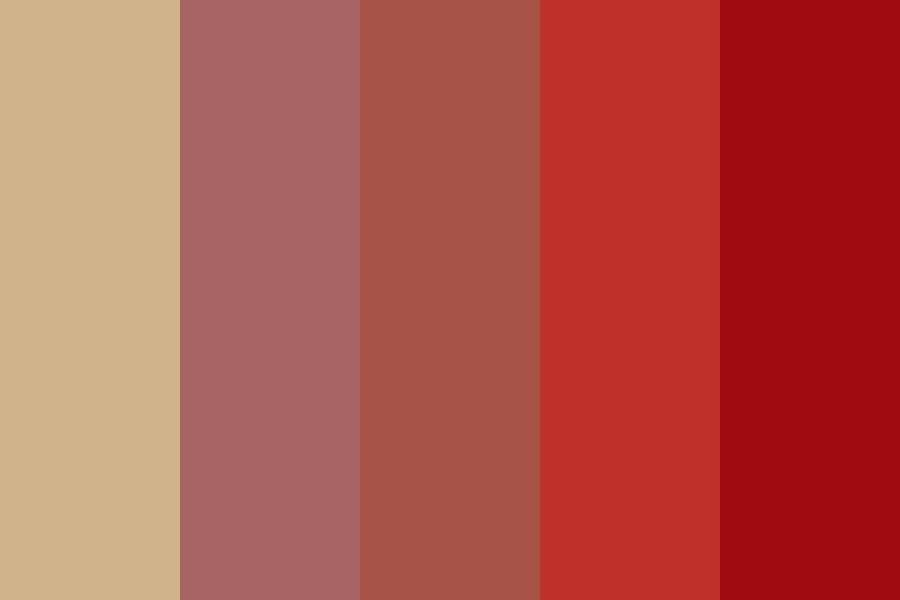
Source: color-hex.com
Understanding how dark reddish-brown relates to other hues is essential for creating harmonious and visually appealing compositions.Compared to dark red, dark reddish-brown is more muted and earthy. It lacks the vibrancy and intensity of pure red, possessing a greater degree of brown undertones. Compared to dark brown, dark reddish-brown has a warmer, more reddish cast. It’s less neutral and more evocative of natural materials like wood and earth.
Compared to olive green, dark reddish-brown is warmer and less cool. It lacks the refreshing quality of green, instead conveying a sense of groundedness and stability.This color interacts well with a variety of other colors. Complementary color schemes, such as dark reddish-brown paired with teal or turquoise, create a dynamic and visually stimulating contrast. Contrasting color schemes, such as dark reddish-brown paired with bright yellow or orange, create a bold and energetic effect.This color can be used to create depth and dimension in artwork or design by layering different shades and textures.
Using darker shades in the foreground and lighter shades in the background can create a sense of perspective. Combining this color with rough textures, such as wood grain or stone, can add visual interest and tactile appeal.Imagine a visual comparison. On the left, a swatch of dark reddish-brown. To its right, a swatch of dark red, noticeably brighter and more saturated.
Next to that, a swatch of dark brown, more neutral and subdued. Finally, a swatch of olive green, cooler and more refreshing. The relationships between these colors are clear: dark reddish-brown sits comfortably between the warmth of red and the neutrality of brown, while offering a distinct contrast to the coolness of green.
Conclusive Thoughts
Our exploration of dark reddish brown reveals a color far more intricate and significant than it initially appears. It’s a testament to the beauty and complexity of the natural world, a source of inspiration for artists and designers, and a color steeped in history and symbolism. Whether you’re a nature enthusiast, an artist seeking inspiration, or simply curious about the world around you, understanding this color offers a richer appreciation for the subtle nuances that shape our visual experience.
From the spectral science behind its perception to its cultural significance, dark reddish brown proves to be a color worthy of deeper consideration. It’s a reminder that even the most seemingly simple aspects of our environment hold a wealth of fascinating stories waiting to be discovered.
FAQ Corner
Why is soil sometimes dark reddish brown?
Often, it’s due to oxidation of iron compounds within the soil. The presence of organic matter also contributes to the color, as decaying plant material releases pigments.
What’s the difference between umber and sepia?
Both are dark reddish browns, but umber tends to be more earthy and greenish, while sepia is richer, warmer, and often has a slightly purplish undertone.
How does lighting affect how we perceive dark reddish brown?
Warm light (like incandescent bulbs) will enhance the reddish tones, making it appear more vibrant. Cool light (like fluorescent bulbs) can mute the red and emphasize the brown tones, making it appear more subdued.
What metals exhibit this color when corroded?
Iron and copper are prime examples. Rust (iron oxide) is a classic dark reddish brown, and copper corrosion often produces a similar hue.
What is the ecological significance of dark reddish brown coloration in plants?
It can provide camouflage, protect against UV radiation, or even signal toxicity to herbivores. The specific function depends on the plant species and its environment.
How was dark reddish brown pigment historically extracted for art?
Umber pigments were often mined directly from clay deposits. Sepia was historically derived from the ink sacs of cuttlefish.
