Understanding Sheen in Paint A Complete Guide
Ever wondered why some walls seem to glow while others feel soft and muted? It all comes down to paint sheen! This isn’t just about how shiny your walls are; it’s a crucial element impacting durability, cleanability, and even how a room
-feels*. We’re diving deep into the world of paint sheens, exploring everything from the science of light reflection to practical application tips, so you can confidently choose the perfect finish for every space in your home.
From the subtle elegance of matte to the gleaming brilliance of gloss, each sheen level offers unique characteristics and benefits. We’ll break down the historical evolution of these classifications, compare them side-by-side, and show you how to factor in everything from lighting to room function to achieve a truly stunning and long-lasting result. Get ready to transform your painting projects with this comprehensive guide!
Understanding Paint Sheen: A Guide for Homeowners
Choosing the right paint sheen can feel overwhelming. It’s not just about color; the sheen dramatically impacts how your walls look and feel, and how durable they are. This guide breaks down everything you need to know about paint sheen, from the science behind it to practical application tips. Let’s dive in and demystify this often-confusing topic!
Essentially, paint sheen refers to the level of light reflection from a painted surface. Different sheens reflect light differently, creating distinct visual effects. A higher sheen reflects more light, making the surface appear brighter and more glossy. Conversely, a lower sheen absorbs more light, resulting in a flatter, more matte appearance. The historical evolution of paint sheen classifications has been driven by advancements in paint technology and changing aesthetic preferences.
Early paints were often quite glossy, but as pigments and binders improved, manufacturers began developing a wider range of sheens to cater to diverse design styles and functional needs.
Comparing Paint Sheen Levels
To give you a clear picture, here’s a table summarizing the key characteristics of common paint sheens. This will help you quickly compare and contrast the options.
| Sheen Level | Reflectivity (1-10) | Durability (1-10) | Typical Applications |
|---|---|---|---|
| Matte | 1-2 | 2-3 | Bedrooms, low-traffic areas, ceilings |
| Eggshell | 3-4 | 4-5 | Living rooms, dining rooms |
| Satin | 5-6 | 6-7 | Hallways, kitchens, children’s rooms |
| Semi-Gloss | 7-8 | 7-8 | Trim, doors, bathrooms |
| Gloss | 9-10 | 9-10 | Cabinets, furniture, high-traffic areas |
Matte Sheen: The Subtle Elegance
Matte paint boasts the lowest reflectivity of all common paint sheens. It has a velvety, non-reflective finish that creates a soft, sophisticated look. A key characteristic of matte paint is its excellent hiding power; it effectively minimizes the appearance of imperfections on the wall surface, such as bumps, dents, and uneven texture. This makes it a great choice for older homes or walls that haven’t been perfectly prepped.
Imagine a cozy living room with textured walls and a warm, inviting atmosphere. The walls are painted a soft gray in a matte finish. The low reflectivity minimizes the appearance of the wall’s texture, creating a calming and visually appealing space. The matte finish also absorbs light, contributing to the room’s overall sense of tranquility. It’s perfect for creating a relaxing retreat.
Eggshell Sheen: A Balanced Choice
Eggshell paint gets its name from its subtle resemblance to the texture of an eggshell. It offers a slight sheen, more than matte but less than satin. This provides a gentle visual interest without being overly reflective. Compared to matte, eggshell paint is more durable and easier to clean, making it a practical choice for many rooms.
Let’s consider using eggshell paint in a bathroom. Here’s a breakdown of the pros and cons:
- Pros: Slightly more durable than matte, offering better resistance to moisture and scuffs. Easier to clean than matte, allowing for quick wipe-downs. Provides a warmer, more inviting feel than higher-sheen paints.
- Cons: Still susceptible to water damage if exposed to excessive moisture. Not as scrubbable as satin or semi-gloss. May show minor imperfections more than matte.
Satin Sheen: Versatility and Cleanability
Satin paint strikes a balance between durability and aesthetics. It has a slightly higher reflectivity than eggshell, creating a subtle shimmer. This sheen also offers improved durability and cleanability, making it a practical choice for high-traffic areas. The increased reflectivity can make a room feel a bit brighter.
Let’s say you’re painting a hallway. To estimate the amount of satin paint you’ll need, first calculate the total wall area. For a hallway that’s 10 feet long, 8 feet wide, and 8 feet high, the total wall area is (10 + 8 + 10 + 8)
– 8 = 336 square feet. Most paints cover around 350-400 square feet per gallon.
Therefore, you’d likely need just over one gallon of satin paint for this hallway. Always buy a little extra for touch-ups!
Semi-Gloss Sheen: The Workhorse Finish
Semi-gloss paint is known for its high reflectivity and excellent resistance to moisture. It’s a durable and easy-to-clean finish, making it ideal for areas that see a lot of wear and tear. Compared to satin, semi-gloss is even more durable and scrubbable, but it also reflects more light, which can highlight imperfections on the wall.
“In a family home with young children and a busy kitchen, semi-gloss paint on the walls is a lifesaver. Spills and splatters are inevitable, and the semi-gloss finish allows for easy cleaning without damaging the paint. It’s a small investment that pays off in the long run, saving time and frustration.”
Gloss Sheen: Maximum Protection and Shine
Gloss paint delivers the highest reflectivity and exceptional durability. It creates a sleek, shiny finish that’s incredibly easy to clean. While it’s the most durable option, it also highlights every imperfection on the wall surface, so proper preparation is crucial. It’s often used where maximum protection and easy cleaning are paramount.
Consider a kitchen island painted in a high-gloss finish. The glossy surface not only looks stylish but also withstands frequent cleaning and resists stains. It’s a practical and visually appealing choice for a high-use area.
Cleaning Requirements Comparison
| Sheen Level | Cleaning Frequency | Recommended Cleaning Products | Potential Damage from Harsh Cleaners |
|---|---|---|---|
| Matte | Monthly (dusting) | Mild soap and water | High risk of discoloration and damage |
| Satin | Weekly (spot cleaning) | Mild soap and water, gentle scrub brush | Moderate risk of dulling the finish |
| Semi-Gloss | As needed (wipe down) | All-purpose cleaner, non-abrasive sponge | Low risk, but prolonged exposure to harsh chemicals can fade color |
| Gloss | As needed (wipe down) | All-purpose cleaner, microfiber cloth | Very low risk, highly resistant to most cleaners |
Factors Influencing Sheen Appearance
The perceived sheen of a paint finish isn’t solely determined by the paint itself. Lighting conditions play a significant role. Natural light tends to soften the appearance of sheen, while artificial light can accentuate it. Wall texture also impacts how sheen is perceived; rougher textures will minimize the effect of higher sheens.
Color choice also influences sheen. Darker colors tend to absorb more light, making the sheen appear less noticeable. Lighter colors reflect more light, making the sheen more apparent. A common misconception is that gloss paint always looks “shiny.” While it does have high reflectivity, the overall appearance is also influenced by the color and lighting.
Paint Sheen and Room Functionality
Source: wixstatic.com
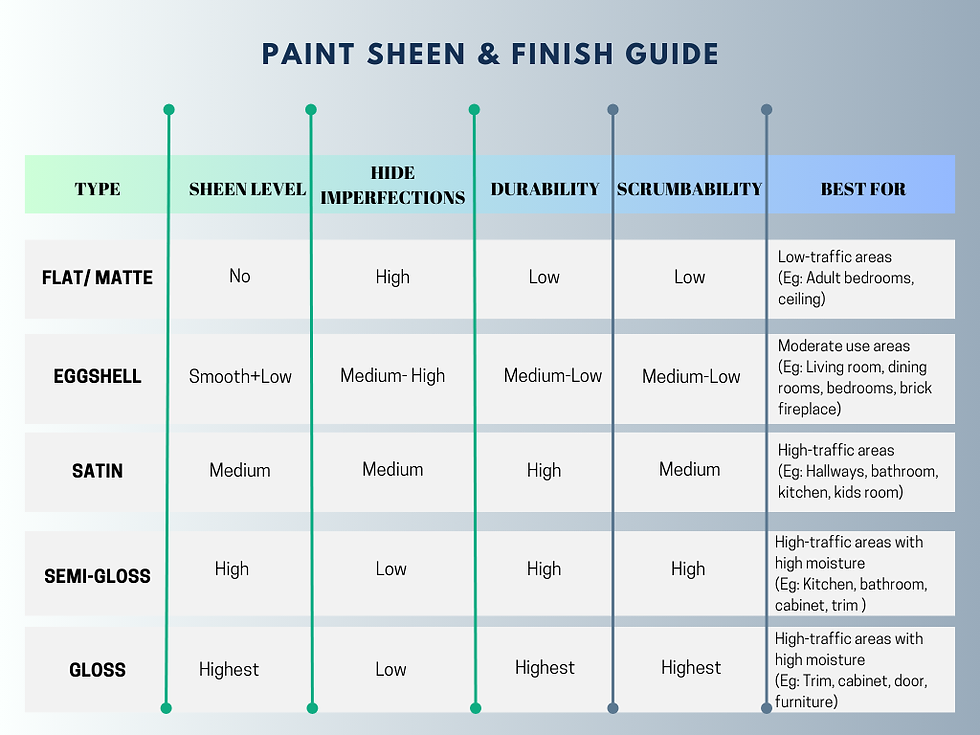
Choosing the right paint sheen involves considering the room’s function and your desired aesthetic. For kitchens and bathrooms, durability and moisture resistance are key, making satin or semi-gloss good choices. Bedrooms and living rooms benefit from the softer look of matte or eggshell. Hallways and children’s rooms require a balance of durability and cleanability, making satin a popular option.
Foot traffic and the potential for spills are crucial factors. High-traffic areas and rooms prone to spills require more durable, scrubbable finishes. Sheen also affects the perceived size and brightness of a room. Higher sheens can make a room feel larger and brighter, while lower sheens can create a more intimate and cozy atmosphere.
Here’s a simplified flowchart to guide your decision:
- Room Function: Kitchen/Bathroom? Living Room/Bedroom? Hallway/Children’s Room?
- Traffic Level: High? Moderate? Low?
- Desired Aesthetic: Bright & Modern? Cozy & Relaxing?
- Sheen Recommendation: (Based on answers above – e.g., Kitchen/High Traffic = Semi-Gloss, Bedroom/Low Traffic = Matte)
Application Techniques and Sheen Consistency
Proper surface preparation is paramount for achieving a consistent sheen. Walls should be clean, dry, and free of imperfections. Using the correct application tools is also essential. Brushes are ideal for detailed work and achieving a smooth finish with matte and eggshell paints. Rollers are efficient for covering large areas with satin, semi-gloss, and gloss paints.
Sprayers provide the most even finish, especially for gloss paints.
The number of coats and rolling direction also impact sheen uniformity. Applying two thin coats is generally better than one thick coat. Overlapping each roller stroke slightly helps to avoid streaks. With matte finishes, avoid excessive pressure when rolling to prevent burnishing. With gloss finishes, ensure even pressure and consistent speed to avoid lap marks.
Advanced Sheen Considerations
Sheen variation can be intentionally used to create decorative effects, such as accent walls or textured finishes. Specialty paints, like metallic and pearlescent paints, offer unique sheen properties that add visual interest. Matching paint sheens when repairing or touching up existing paint jobs can be challenging. It’s always best to test the new paint in an inconspicuous area before applying it to the entire surface.
Imagine a homeowner embarking on a complex painting project involving a living room, dining room, and hallway. The living room calls for a calming matte finish, the dining room a sophisticated eggshell, and the hallway a durable satin. Coordinating the project effectively requires careful planning, including purchasing the correct amount of each sheen, ensuring proper surface preparation, and applying the paints in the appropriate order to avoid color or sheen inconsistencies.
Ultimate Conclusion
Navigating the world of paint sheen can feel overwhelming, but hopefully, this guide has demystified the process. Whether you’re tackling a full home renovation or just a quick refresh, understanding the nuances of matte, eggshell, satin, semi-gloss, and gloss finishes empowers you to make informed decisions. Remember to consider lighting, texture, and room function – and don’t be afraid to experiment! With a little knowledge and planning, you can achieve a beautifully painted space that reflects your personal style and stands the test of time.
So, go forth and paint with confidence, knowing you’ve got the sheen secrets in your arsenal. Happy painting!
FAQ Resource
Why does sheen affect cleanability?
Higher sheen levels (like semi-gloss and gloss) have a smoother surface, making them less porous and easier to wipe clean. Lower sheens (like matte) are more textured and absorb spills more readily.
Can I change the sheen level in a room later?
It’s tricky! You generally need to sand down the existing paint and prime before applying a different sheen. A drastic sheen change can highlight imperfections.
What’s the best sheen for a bathroom with poor ventilation?
Semi-gloss or gloss are ideal due to their moisture resistance. They’ll help prevent mildew and are easy to clean.
Does a higher sheen make a room look bigger?
Generally, yes. Higher sheens reflect more light, which can create the illusion of more space. However, too much gloss can feel sterile.
Why does my matte paint sometimes look chalky?
This can happen if the paint isn’t fully cured or if it’s exposed to excessive moisture. Proper ventilation during painting is key.
Can I use metallic or pearlescent paints in any room?
While beautiful, specialty sheens like metallic and pearlescent can be more difficult to apply evenly and may show imperfections more readily. They’re often best suited for accent walls or decorative elements.
