Farrow Ball Green Smoke A Deep Dive into Timeless Color
There’s something undeniably captivating about Farrow Ball paints, isn’t there? They’re not just colors; they’re stories, steeped in history and crafted with a reverence for traditional techniques. We’re diving deep into one of their most beloved shades, “Green Smoke,” exploring its nuances, its applications, and the magic it brings to interior spaces. It’s a color that feels both grounded and ethereal, and understanding its complexities can unlock a whole new level of design potential.
From its origins rooted in historical palettes to its subtle shifts in perception depending on light, “Green Smoke” is far more than just a green paint. It’s a carefully curated experience, a blend of nature’s tranquility and the evocative mystery of smoke. We’ll unpack the color’s characteristics, explore how it plays with other hues, and discover how to best utilize it to create the atmosphere you desire, whether you’re drawn to classic elegance or a more contemporary feel.
Farrow & Ball Green Smoke: A Deep Dive into a Timeless Color
Green Smoke. The name itself evokes a sense of mystery and depth, doesn’t it? It’s a color that’s consistently popular, and for good reason. It’s not just a green; it’s a complex, nuanced shade that brings a touch of drama and sophistication to any space. This article will explore everything you need to know about Farrow & Ball’s Green Smoke, from its historical roots to practical application tips, and how to make it truly shine in your home.
Farrow & Ball isn’t your average paint company. They’ve built a reputation on quality, tradition, and a carefully curated color palette. Understanding their approach is key to appreciating the unique character of Green Smoke.
Historical Context of Farrow Ball and Color Palettes
Farrow & Ball’s story began in 1946 in Dorset, England, with a focus on supplying high-quality paints to local craftsmen. Their early methods were deeply rooted in traditional techniques – using natural pigments, chalk, and linseed oil. This commitment to traditional methods remains central to their process today, resulting in paints with a distinctive depth and texture. Unlike many modern paint brands that rely on synthetic pigments and mass production, Farrow & Ball prioritizes authenticity and craftsmanship.
The color selection at Farrow & Ball isn’t random. It’s heavily influenced by British history, architecture, and design movements. The Victorian era, with its rich, saturated colors and ornate details, is a significant touchstone. The Arts & Crafts movement, emphasizing natural materials and handcrafted beauty, also plays a crucial role. Even the Georgian period, with its more restrained elegance, informs their palette.
They’ve essentially created a visual record of British design history, distilled into a collection of paint colors.
This curated aesthetic sets Farrow & Ball apart. They don’t offer hundreds of colors; instead, they present a carefully considered range, each with a story and a purpose. Green Smoke, in particular, reflects a desire for a color that’s both grounding and intriguing, a shade that feels both timeless and contemporary.
| Era | Influential Design Movement | Example Farrow Ball Color |
|---|---|---|
| Victorian | Arts & Crafts | Card Blue |
| Georgian | Neoclassical | Strong White |
| Edwardian | Arts & Crafts Revival | Railings |
Understanding “Green Smoke”
Color Characteristics
Color Characteristics
Source: clairejefford.com
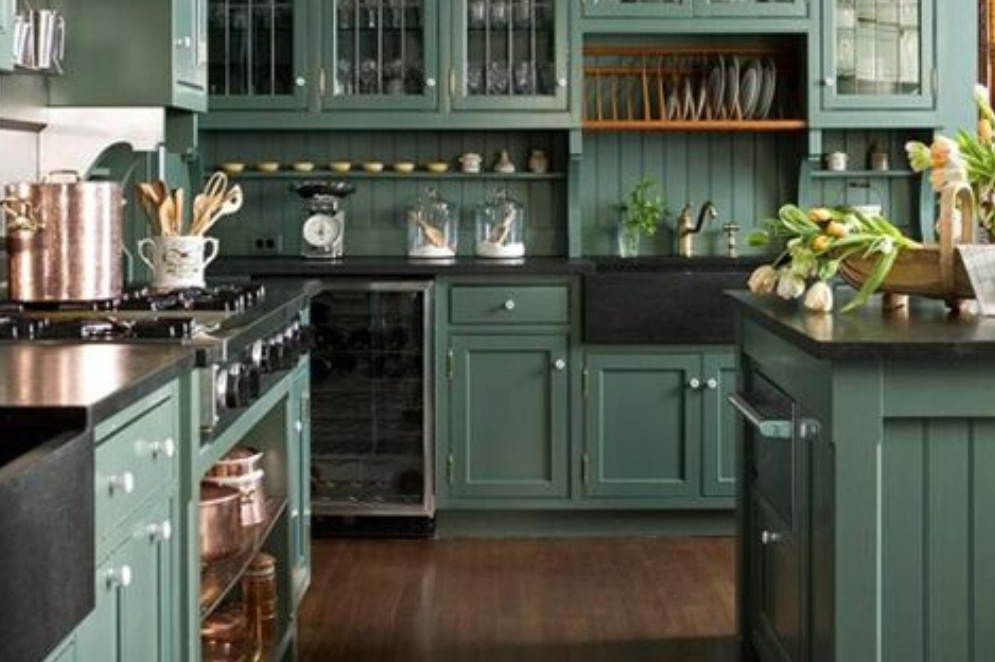
Green Smoke (No. 242) is a complex mid-tone green with grey undertones. It’s not a bright, vibrant green; instead, it possesses a muted, almost smoky quality. The grey undertones are crucial – they prevent the green from feeling too cheerful or tropical, lending it a more sophisticated and grounded feel. The saturation is moderate; it’s not a deeply saturated jewel tone, but it’s also not a pale, washed-out green.
The luminosity is relatively low, contributing to its depth and richness.
The perception of Green Smoke is highly dependent on lighting. In bright, natural light, the green tones become more apparent. In dimmer, artificial light, the grey undertones come forward, creating a more subdued and almost charcoal-like effect. Surrounding colors also play a significant role. Pairing it with warm neutrals will emphasize its coolness, while pairing it with other greens or blues will create a harmonious, monochromatic scheme.
Visually, Green Smoke evokes a sense of quiet drama and understated elegance. It’s calming without being boring, and sophisticated without feeling stuffy. It has a depth that draws you in, creating a feeling of intimacy and warmth.
Imagine a color chart. Green Smoke would sit roughly in the middle of the spectrum, leaning slightly towards the grey-green side. To its right would be a warm beige, like Farrow & Ball’s Skimming Stone, representing a warmer, more neutral tone. To its left would be a neutral grey, like Farrow & Ball’s Cornforth White, demonstrating a cooler, more understated shade.
Green Smoke occupies the space between these two, offering a balance of warmth and coolness, with its distinctive green hue.
Applications of “Green Smoke” in Interior Design
Green Smoke is surprisingly versatile and can be used effectively in various rooms of the house. In a living room, it creates a cozy and inviting atmosphere, perfect for relaxation and conversation. In a bedroom, it promotes a sense of calm and tranquility, ideal for restful sleep. A hallway painted in Green Smoke feels welcoming and sophisticated, setting the tone for the rest of the home.
Even in a kitchen, it can work beautifully, especially when paired with natural wood tones and brass accents.
Architecturally, Green Smoke complements styles like Victorian, Edwardian, and Arts & Crafts. Its depth and richness enhance the details of these periods, while its muted tones prevent it from overwhelming the space. It also works surprisingly well in more modern homes, adding a touch of character and warmth to minimalist interiors.
To create different moods, Green Smoke can be paired with other Farrow & Ball colors. For a dramatic and moody effect, combine it with Hague Blue or Off Black. For a more harmonious and calming scheme, pair it with Ammonite or Pigeon. For a touch of contrast, use it with a warm white like Wimborne White.
- Living Room: Accent wall behind a fireplace, paired with warm wood furniture and brass lighting.
- Bedroom: All walls for a cocooning effect, complemented by linen bedding and soft lighting.
- Hallway: Creates a welcoming and sophisticated entrance, paired with a gallery wall of artwork.
- Kitchen: Lower cabinets or an island, contrasted with white upper cabinets and marble countertops.
- Study: Walls to create a focused and inspiring workspace, paired with a dark wood desk and leather chair.
Complementary Colors and Color Schemes
Colors that harmonize well with Green Smoke include other greens (like Pigeon or Green Blue), greys (like Cornforth White or Pavilion Grey), and warm neutrals (like Skimming Stone or Shaded White). Contrasting colors, such as blush pink or mustard yellow, can add a pop of energy and visual interest.
The principles of color theory are essential when using Green Smoke effectively. Understanding complementary colors, analogous colors, and the impact of saturation and luminosity will help you create a balanced and visually appealing scheme. Green Smoke, being a mid-tone color with grey undertones, works well as a grounding element in a variety of palettes.
Here are a few specific color scheme suggestions:
| Primary Color | Secondary Color | Accent Color | Suggested Room |
|---|---|---|---|
| Green Smoke | Cornforth White | Brass Accents | Living Room |
| Green Smoke | Skimming Stone | Blush Pink | Bedroom |
| Green Smoke | Pavilion Grey | Mustard Yellow | Study |
Finishes and Textures with “Green Smoke”
Farrow & Ball offers a range of finishes, each affecting the appearance of Green Smoke differently. Estate Emulsion provides a matte finish, emphasizing the color’s depth and richness. Modern Emulsion offers a slightly more durable finish with a subtle sheen. Estate Eggshell provides a velvety finish with a hint of sheen, ideal for hallways and kitchens. The choice depends on the room and desired level of durability.
Texture can significantly enhance the visual impact of Green Smoke. Limewash, for example, creates a chalky, textured surface that softens the color and adds a sense of history. Plaster finishes can create a more rustic and organic feel. These textured finishes interact with the light, creating subtle variations in color and depth.
For walls, Estate Emulsion or Estate Eggshell are generally suitable. For trim and doors, Modern Emulsion provides a more durable and wipeable finish.
Using Green Smoke with a limewash finish creates a wonderfully soft and diffused effect, the color appearing almost ethereal and subtly shifting with the light. In contrast, a Modern Emulsion finish brings out the color’s inherent depth and richness, creating a more defined and dramatic look.
“Green Smoke” and Lighting
Different types of lighting dramatically influence the perception of Green Smoke. Natural light brings out the green tones, while artificial light can emphasize the grey undertones. Warm lighting (e.g., incandescent bulbs) will enhance the color’s warmth, while cool lighting (e.g., LED bulbs) will make it appear cooler and more grey.
Room orientation also matters. North-facing rooms tend to have cooler, more diffused light, which can make Green Smoke appear darker and more muted. South-facing rooms receive warmer, brighter light, which will bring out the green tones and make the color feel more vibrant.
To complement Green Smoke, consider using layered lighting – a combination of ambient, task, and accent lighting. Warm-toned bulbs are generally recommended to enhance the color’s warmth and create a cozy atmosphere.
Imagine a north-facing room painted in Green Smoke. To maximize its appeal, you’d need to incorporate warm-toned lighting, such as table lamps with soft white bulbs and strategically placed spotlights to highlight architectural details. A dimmer switch would allow you to adjust the lighting intensity to suit the mood.
Comparing “Green Smoke” to Similar Farrow & Ball Colors
Green Smoke shares similarities with other green-toned colors in the Farrow & Ball range, such as Pigeon and Green Blue. However, subtle differences in hue, saturation, and undertones distinguish it. Pigeon is a slightly brighter and more vibrant green, while Green Blue has a more pronounced blue undertone. Green Smoke sits in between, offering a more muted and sophisticated feel.
If you’re looking for a brighter, more energetic green, Pigeon might be a better choice. If you prefer a cooler, more blue-toned green, Green Blue could be more suitable. However, if you want a versatile, grounding green with a touch of drama, Green Smoke is an excellent choice.
| Color Name | Key Characteristics | Best Use Case |
|---|---|---|
| Green Smoke | Muted green with grey undertones, moderate saturation, low luminosity | Living rooms, bedrooms, hallways |
| Pigeon | Brighter green with grey undertones, higher saturation | Kitchens, bathrooms, accent walls |
| Green Blue | Green with blue undertones, moderate saturation, low luminosity | Bedrooms, studies, calming spaces |
Practical Considerations for Using “Green Smoke”
Proper preparation is crucial for achieving the best results with Green Smoke. Start by thoroughly cleaning the surface to remove any dirt or grease. Priming is essential, especially on new plaster or previously painted surfaces. A primer will ensure even color coverage and prevent the color from being absorbed unevenly.
Apply Green Smoke in thin, even coats using a high-quality brush or roller. Allow each coat to dry completely before applying the next. Two coats are typically sufficient for full coverage.
Common painting mistakes to avoid include applying the paint too thickly, skipping the priming step, and not allowing the paint to dry properly between coats. Take your time and follow the instructions carefully for a professional finish.
- Prepare the Surface: Clean the wall thoroughly with a mild detergent and rinse well.
- Prime the Wall: Apply a coat of Farrow & Ball’s Primer & Undercoat, allowing it to dry completely.
- First Coat: Apply the first coat of Green Smoke Estate Emulsion using a high-quality brush or roller.
- Drying Time: Allow the first coat to dry completely, typically for 4-6 hours.
- Second Coat: Apply a second coat of Green Smoke Estate Emulsion, ensuring even coverage.
- Final Drying: Allow the final coat to dry completely for 24 hours before placing furniture against the wall.
The Psychology of Green and Smoke Colors
Green is universally associated with nature, tranquility, and growth. It evokes feelings of peace, harmony, and renewal. It’s a color that promotes relaxation and reduces stress.
The connotations of “smoke” are more complex. It suggests mystery, warmth, and a sense of history. Smoke evokes images of cozy fireplaces, ancient castles, and a connection to the past. It adds a layer of depth and intrigue to any color.
The combination of green and smoke creates a specific emotional atmosphere – one of quiet sophistication, understated elegance, and a sense of timelessness. It’s a color that feels both grounding and intriguing, calming and inspiring.
A room painted in Green Smoke is likely to evoke a feeling of calm, warmth, and intimacy. It’s a space that feels both welcoming and sophisticated, perfect for relaxation and contemplation.
“Green Smoke” in Different Design Styles (Beyond Traditional)
While Green Smoke is often associated with traditional design styles, it can also be incorporated into contemporary or minimalist schemes. The key is to use it strategically as an accent color or to create a focal point.
In a modern setting, Green Smoke can be used on an accent wall, adding a touch of color and personality to an otherwise neutral space. It can also be used on furniture or accessories to create a pop of visual interest.
Unexpected pairings of Green Smoke with modern materials, such as concrete, steel, and glass, can create a striking and contemporary look. The contrast between the organic feel of the green and the industrial feel of the materials is visually compelling.
Imagine a modern living room with concrete floors and white walls. An accent wall painted in Green Smoke would add a touch of warmth and sophistication to the space. The green would be complemented by minimalist furniture in neutral tones, such as grey and beige, and accented with brass or copper details. The overall effect would be a space that is both modern and inviting, with a touch of understated elegance.
The concrete floor would provide a cool, industrial contrast to the warmth of the green, while the white walls would create a sense of spaciousness and light.
Conclusive Thoughts
Ultimately, “Green Smoke” is a testament to Farrow Ball’s dedication to creating colors that resonate with history and emotion. It’s a versatile shade, capable of lending a sense of depth and intrigue to any room, from cozy bedrooms to grand hallways. By understanding its subtleties and embracing its unique qualities, you can harness the power of this captivating color to transform your home into a space that feels both timeless and deeply personal.
So, go ahead, experiment, and let “Green Smoke” inspire your next design adventure!
Clarifying Questions
Why is Farrow Ball paint so expensive?
Farrow Ball uses traditional methods, including natural pigments and hand-milled formulas, which are more costly than mass-produced paints. They also focus on quality and durability, resulting in a richer, longer-lasting finish.
Is Green Smoke a cool or warm color?
It’s tricky! Green Smoke leans towards a cool green but has warm undertones of grey and brown, making it surprisingly adaptable. It’s best to test it in your space to see how it reads in your lighting.
What’s the difference between Estate Emulsion and Modern Emulsion?
Estate Emulsion has a flatter, more velvety finish, while Modern Emulsion has a slightly more durable, washable finish. Estate Emulsion is often preferred for its traditional look, while Modern Emulsion is better for high-traffic areas.
Can I use Green Smoke in a small room?
Yes, but be mindful of lighting. In a north-facing small room, it might feel a bit dark. Ensure you have ample artificial light to brighten the space and prevent it from feeling closed in. Consider using it on an accent wall instead of all four walls.
How do I test a Farrow Ball color before committing?
Order sample pots! Farrow Ball’s tester pots are a great way to see how the color looks in your space at different times of day and under different lighting conditions. Paint a large patch (at least a square foot) on the wall and observe it for a few days.
